When noise from next door is keeping you up, it's natural to want proof. Measuring it won't settle a dispute on its own, but a good record of when the noise happens, how long it lasts and roughly how loud it is makes it far easier for a landlord, housing association or council to act.
This guide focuses on the UK, with notes for elsewhere.
Is there a legal decibel limit for neighbours?
Mostly, no, and that surprises people. In England and Wales, noise from a home is usually dealt with as a statutory nuisance under the Environmental Protection Act 1990. There's no fixed decibel threshold. A council officer judges whether the noise unreasonably interferes with the use and enjoyment of your home, considering things like:
- how loud it is and what kind of noise it is (bass and thudding is often worse than the level suggests);
- what time it happens and how long it goes on;
- how often it happens;
- what's normal for the area.
There is one number to know. Under the Noise Act 1996, councils can act against night-time noise from a dwelling between 11pm and 7am if it exceeds the permitted level, measured inside your home with windows and doors closed. That level is 34 dB(A) where the background is 24 dB(A) or less, or 10 dB above the background where it's higher. Councils measure this with their own calibrated equipment.
Outside the UK, rules vary widely. Many US cities and states set limits at the property line, often around 50 to 60 dB(A) by day and 5 to 10 dB lower at night. Check your local noise ordinance.
What to measure
Your phone readings are evidence of a pattern, not legal proof. What you want is a picture an officer can understand quickly.
- Measure where you're affected. In the bedroom if it's keeping you awake, in the living room if that's where you hear it. Hold the phone at head height, away from walls.
- Measure the background too. Take a reading when the neighbour is quiet, at a similar time of day. The difference between the two matters more than the absolute number.
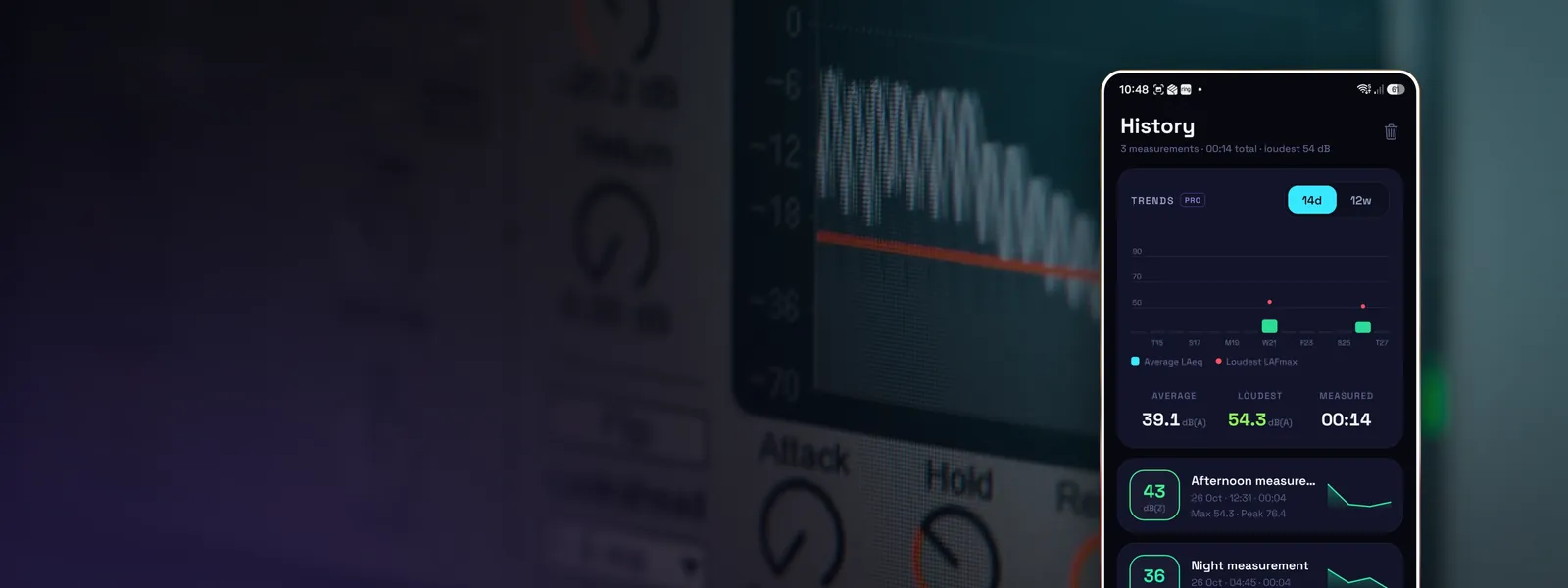
- Record, don't just glance. A recording session gives the average (Leq), the maximum and a timeline showing when the noise peaked. Several minutes is better than a few seconds.
- Note what you heard. "Bass music through the party wall", "footsteps and furniture dragging overhead", "dog barking continuously". Type of noise matters as much as level.
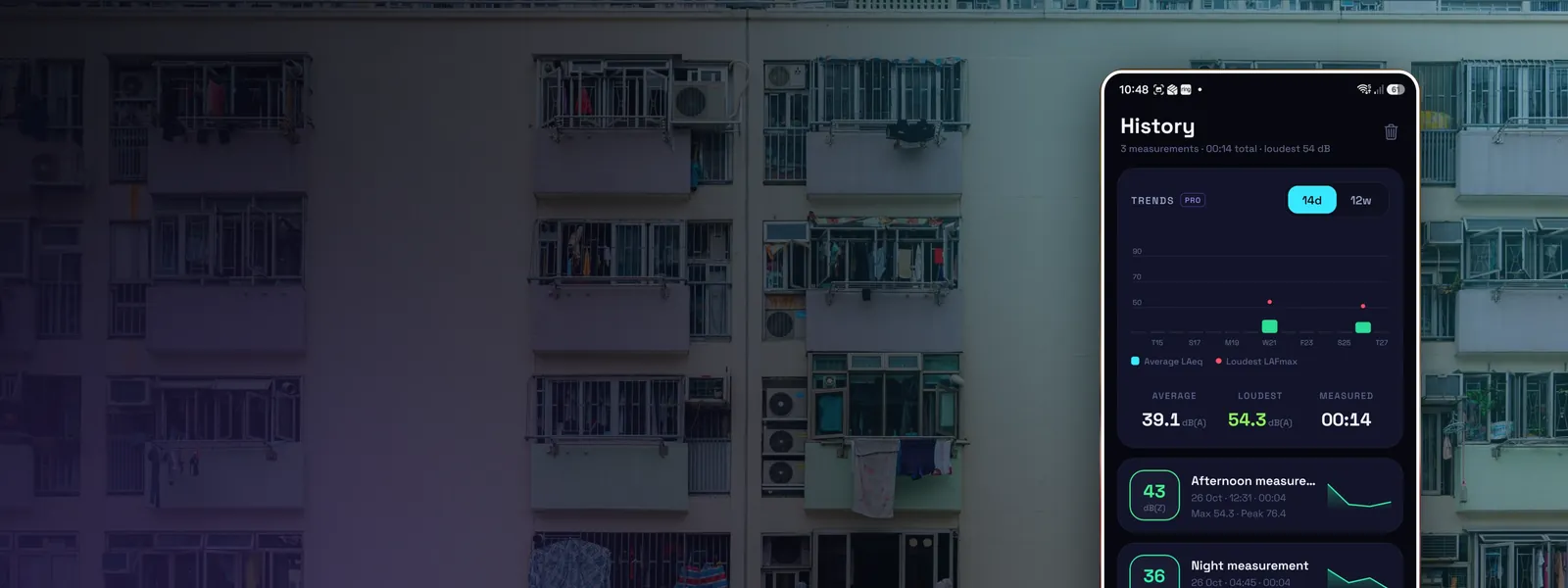
- Keep it going. One bad night is hard to act on. A diary over two or three weeks showing a pattern is much stronger.
Keep a noise diary
Councils usually ask for a written diary alongside any recordings. For each incident note:
- date, start time and end time;
- what the noise was and which room you were in;
- how it affected you (couldn't sleep, couldn't hear the TV, child woken);
- your meter reading: average and max, plus the background reading;
- anything you did, such as knocking on the door or messaging the landlord.
What the numbers can tell you
Use our decibel chart to sense-check readings. In a quiet room at night, background levels of about 25 to 35 dB(A) are typical. Music or voices clearly measuring 10 dB or more above that, late at night, are very likely to be disturbing anyone trying to sleep. WHO guidance for good sleep suggests keeping continuous noise in the bedroom around 30 dB(A), with individual noises below 45 dB(A).
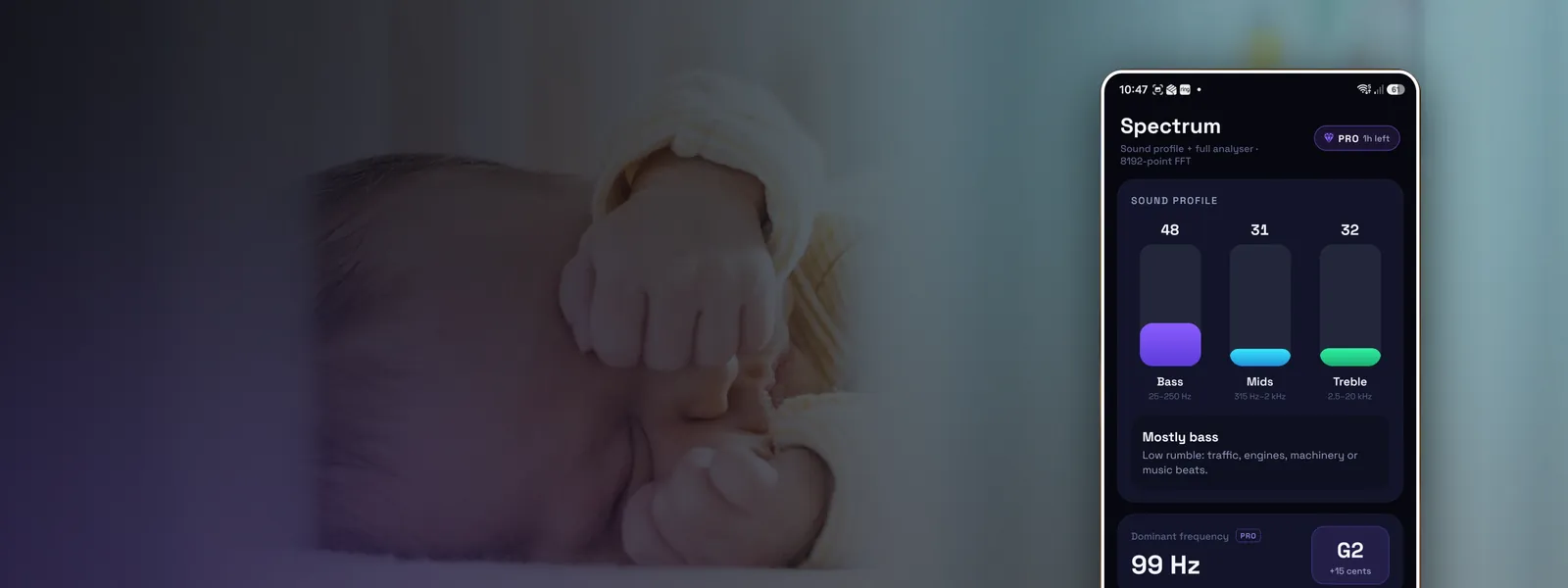
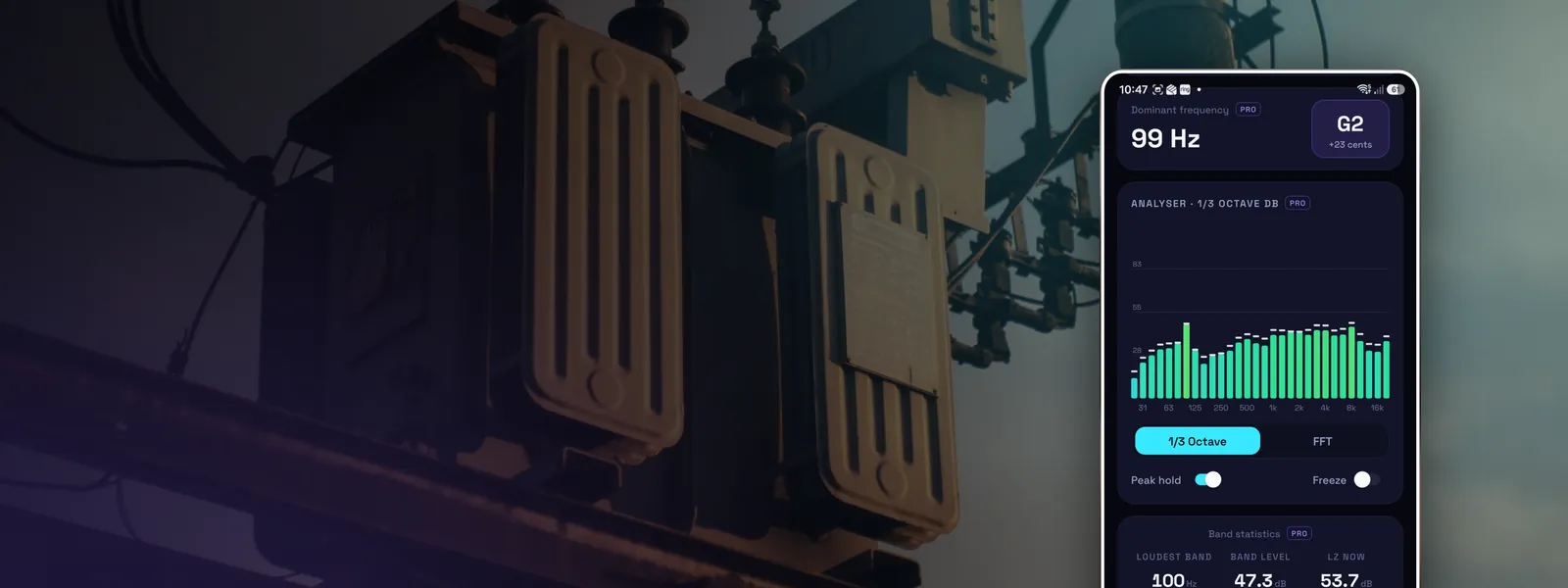
Bass is a special case. Thumping music often measures surprisingly low in dB(A), because A-weighting discounts low frequencies. If your app has C-weighting, record dB(C) as well. A big gap between the two is a sign the problem is mostly bass. See dBA vs dBC.
Steps to take, in order
- Talk to them, if it's safe. Many people genuinely don't know how far their noise carries.
- Contact your landlord or housing association if you rent, or theirs if they do. Tenancy agreements usually cover noise.
- Try mediation. Many councils and housing providers offer free or cheap community mediation.
- Complain to your council's environmental health team, with your diary and recordings. They may install their own recording equipment or visit while the noise is happening.
If you ever feel threatened, call the police instead.