Noise at work is one of the most common causes of permanent hearing loss, and one of the most preventable. Both the UK and the US set legal limits, but they're built differently and the numbers aren't the same. Here's how they compare and what they mean in practice.
UK: Control of Noise at Work Regulations 2005
The UK rules (which mirror the EU Physical Agents Noise Directive) use three thresholds. Each has a daily or weekly average exposure value, written LEP,d and measured in dB(A), and a peak value in dB(C) for sudden loud noises.
| Threshold | Daily exposure | Peak | What the employer must do |
|---|---|---|---|
| Lower exposure action value | 80 dB(A) | 135 dB(C) | Assess the risk, give information and training, and make hearing protection available to anyone who asks |
| Upper exposure action value | 85 dB(A) | 137 dB(C) | Reduce noise exposure as far as reasonably practicable through engineering and organisation, set up hearing protection zones, make hearing protection compulsory, and provide health surveillance (hearing checks) |
| Exposure limit value | 87 dB(A) | 140 dB(C) | Must never be exceeded, taking hearing protection into account |
The regulations use a 3 dB exchange rate. A worker exposed to 88 dB(A) for 4 hours has the same daily exposure as one exposed to 85 dB(A) for 8 hours.
A quick test from the HSE: if you have to raise your voice to be heard by someone about 2 m away for at least part of the day, the noise is probably near or above the upper action value, and a proper assessment is needed. If noise is intrusive, like a busy street or a vacuum cleaner, for most of the day, it's probably around the lower action value.
The music and entertainment sector has had to comply since 2008, and the HSE publishes specific "Sound Advice" guidance for it.
US: OSHA and NIOSH
In the US, the legal limits come from OSHA (the Occupational Safety and Health Administration). Separate, stricter recommendations come from NIOSH (the National Institute for Occupational Safety and Health), the federal research agency.
| OSHA (legal minimum) | NIOSH (recommended) | |
|---|---|---|
| 8-hour limit | 90 dB(A) TWA | 85 dB(A) TWA |
| Exchange rate | 5 dB | 3 dB |
| Hearing conservation programme triggered at | 85 dB(A) TWA (action level) | n/a |
| Impulse/peak ceiling | 140 dB peak | 140 dB peak |
| Time allowed at 100 dB(A) | 2 hours | 15 minutes |
The big difference is the exchange rate. OSHA's 5 dB rule allows much longer at high levels than the physics of sound energy would suggest, which is why NIOSH and most hearing scientists consider it too lenient. At the OSHA action level of 85 dB(A), employers must run a hearing conservation programme: monitoring, annual hearing tests, protection, training and records.
What "hierarchy of control" means for noise
Both systems expect employers to tackle noise at source before handing out earplugs:
- Eliminate or substitute: quieter machines and processes, buying low-noise equipment.
- Engineering controls: enclosures, damping, silencers, isolating vibrating machines.
- Organisational controls: distance, limiting time in noisy areas, job rotation, quiet refuges.
- Hearing protection: as a last line of defence, properly fitted and actually worn.
Real-world protection from earplugs and ear defenders is often 10 dB or more below the figure on the packaging, because of poor fit and taking them off "just for a minute". Even a short time unprotected in high noise can wipe out much of the benefit.
Can I use a phone app to check?
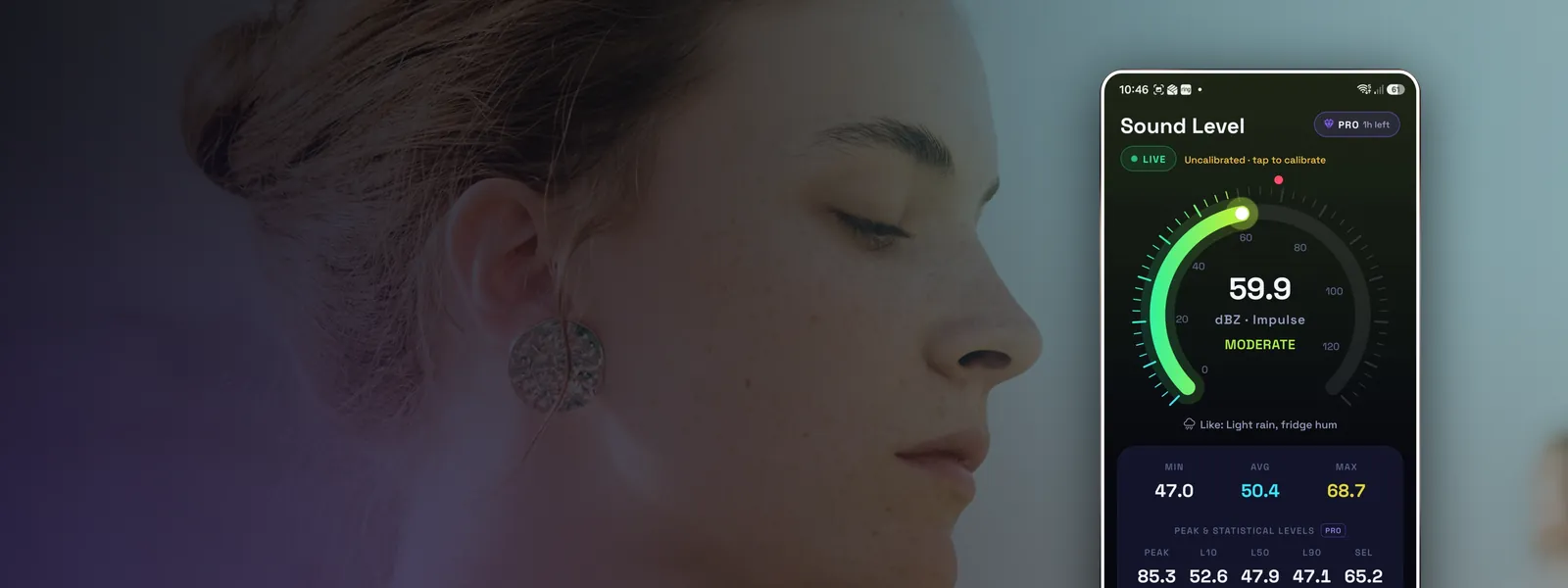
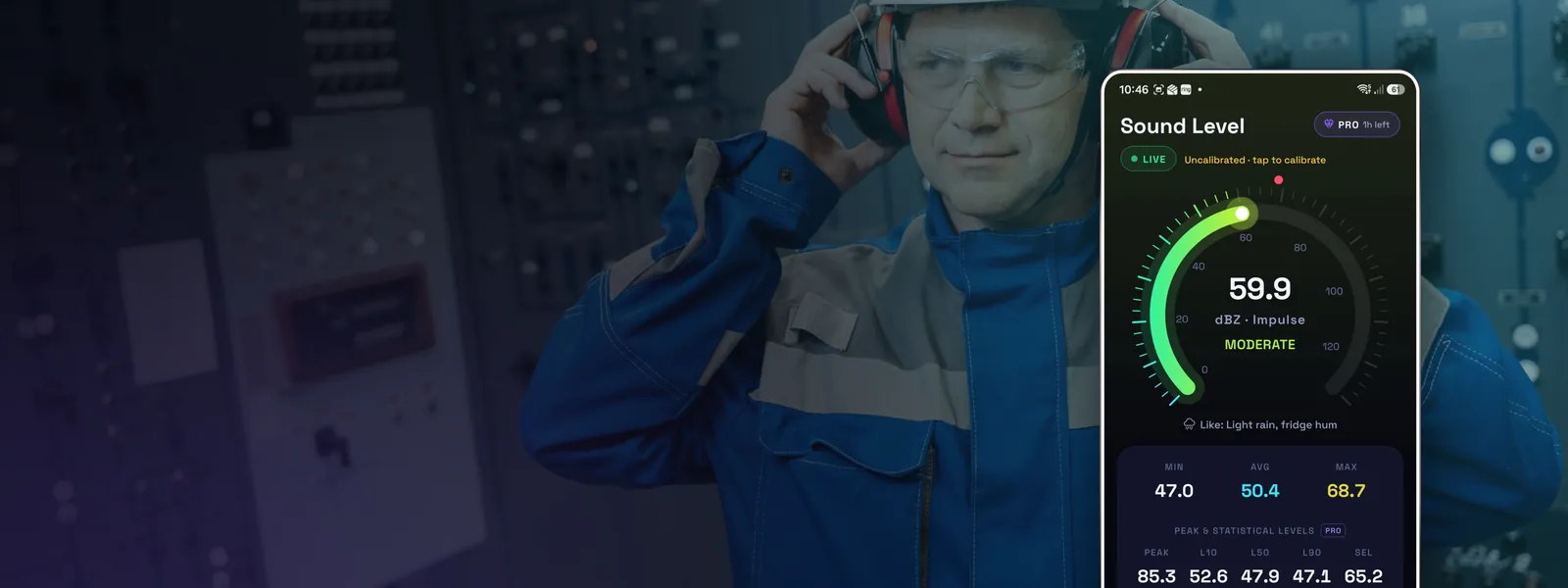
For a rough idea, yes. A good app reading raw microphone audio will usually tell you whether you're in the 75, 85 or 95 dB(A) range, and its noise dose figure shows how quickly you're using your daily allowance. That's useful for spotting problems and starting a conversation.
It isn't a substitute for an employer's formal noise assessment. That needs a calibrated sound level meter or personal dosimeter, used by a competent person, and in the UK the employer must do it whenever workers are likely to be at or above the lower action value. See are decibel meter apps accurate?
Try the free online decibel meter in your browser for a quick reading, or work out your daily noise dose.