Noise-induced hearing loss is permanent, painless while it happens and almost entirely preventable. The World Health Organization estimates that more than a billion young people are at risk because of how they listen to music and the places they go. The key is knowing two numbers: how loud and for how long.
The short version
- Under 70 dB(A): safe, however long you're exposed.
- 85 dB(A): safe for up to 8 hours a day. This is the level where long, regular exposure starts to damage hearing.
- Every 3 dB above 85 halves the safe time.
- 120 dB and above: can cause damage almost instantly.
Safe listening time by level
These times follow the recommendation of the US National Institute for Occupational Safety and Health (NIOSH), which is the most widely used health-based guideline. They're the total for a whole day.
| Average level | Safe time per day | Typical source |
|---|---|---|
| 85 dB(A) | 8 hours | Heavy city traffic, busy restaurant |
| 88 dB(A) | 4 hours | Food processor, noisy bar |
| 91 dB(A) | 2 hours | Petrol lawn mower |
| 94 dB(A) | 1 hour | Motorbike, power drill |
| 97 dB(A) | 30 minutes | Loud spin class |
| 100 dB(A) | 15 minutes | Nightclub, chainsaw |
| 103 dB(A) | 7.5 minutes | Rock concert, mid-venue |
| 106 dB(A) | under 4 minutes | Close to concert speakers |
| 109 dB(A) | under 2 minutes | Front row, very loud gig |
The 3 dB rule comes from physics. A sound 3 dB louder carries twice the energy, so your ears reach the same total dose in half the time. Sounds below 80 dB(A) aren't counted towards the daily dose at all.
You can mix and match. An hour of lawn mowing at 91 dB(A) uses half your daily allowance, so you'd want to keep the rest of the day quieter. The noise exposure calculator adds it up for you.
Why 85 dB?
Hearing damage happens in the inner ear, where tiny hair cells turn vibration into nerve signals. Loud sound over-stimulates and eventually kills them, and they don't grow back. Large studies of workers exposed to noise for years found that risk of hearing loss rises clearly once daily average exposure goes above about 85 dB(A). Below 80 dB(A), the extra risk is very small.
Workplace rules are based on the same evidence, though the exact numbers differ. UK employers must act from 80 dB(A) and enforce hearing protection from 85 dB(A). US workplace law (OSHA) uses 90 dB(A) with a more lenient 5 dB rule. There's more on that in workplace noise limits.
Sudden loud noise
Very loud impulsive sounds such as gunshots, fireworks and explosions can do damage in a single moment. These are measured as peak levels in dB(C). UK workplace regulations set an absolute limit of 140 dB(C) peak, which matches the level at which many hearing bodies say instant damage is likely.
Warning signs
Your ears tell you when sound has been too loud. Take notice if you have:
- ringing, buzzing or hissing in your ears (tinnitus) after leaving a noisy place;
- muffled or "full" hearing after a gig or a day with power tools;
- trouble following conversation in a noisy place that you used to manage;
- to shout to be heard by someone about 2 m away. If you do, the noise is probably above 85 dB(A).
Temporary dullness or ringing usually fades within a day or two, but each episode is a sign of damage that can add up. If it doesn't clear, or you notice hearing changes, see a GP or audiologist.
How to protect your hearing
- Turn it down. Every 3 dB lower doubles your safe time.
- Move away. Doubling your distance from a sound source outdoors cuts the level by about 6 dB, which quadruples safe time.
- Take breaks. Ears recover better with quiet time in between.
- Use hearing protection. Foam earplugs, musicians' earplugs or ear defenders. Fit matters more than the number on the box.
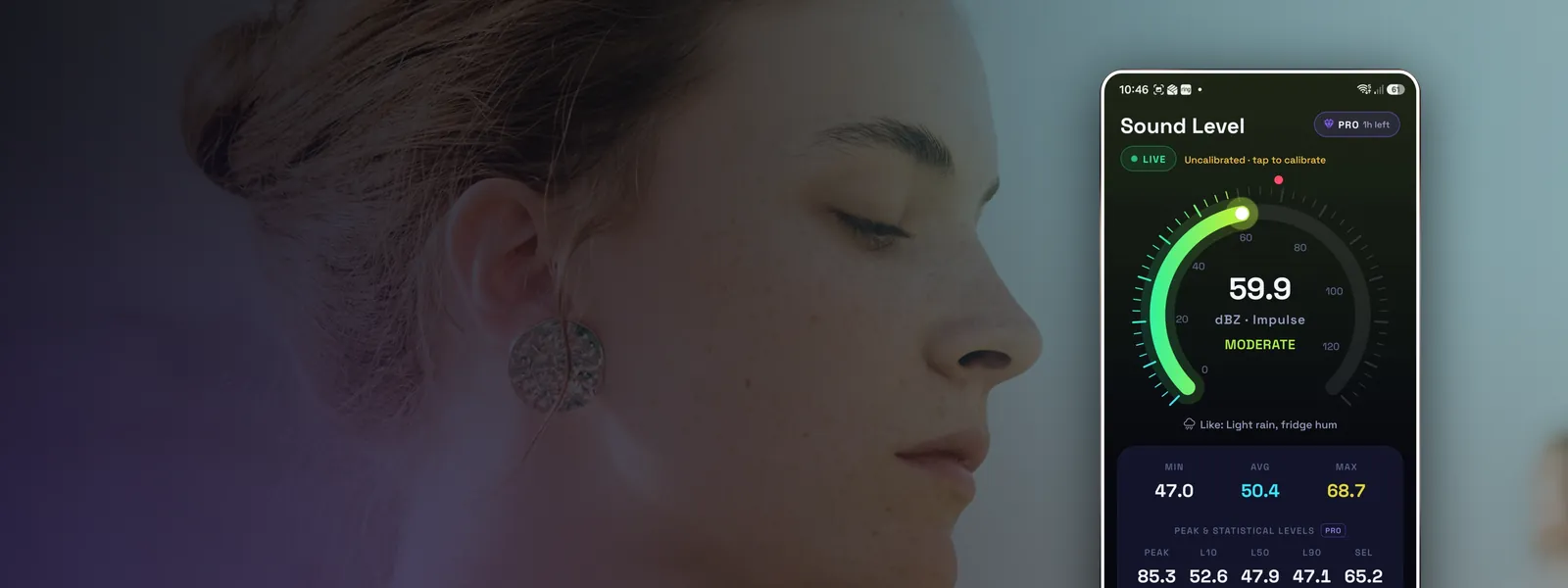
- Measure. Most people are bad at judging loudness, especially after a while in a noisy place.
This guide is general information, not medical advice. If you're worried about your hearing, speak to a GP, pharmacist or audiologist.