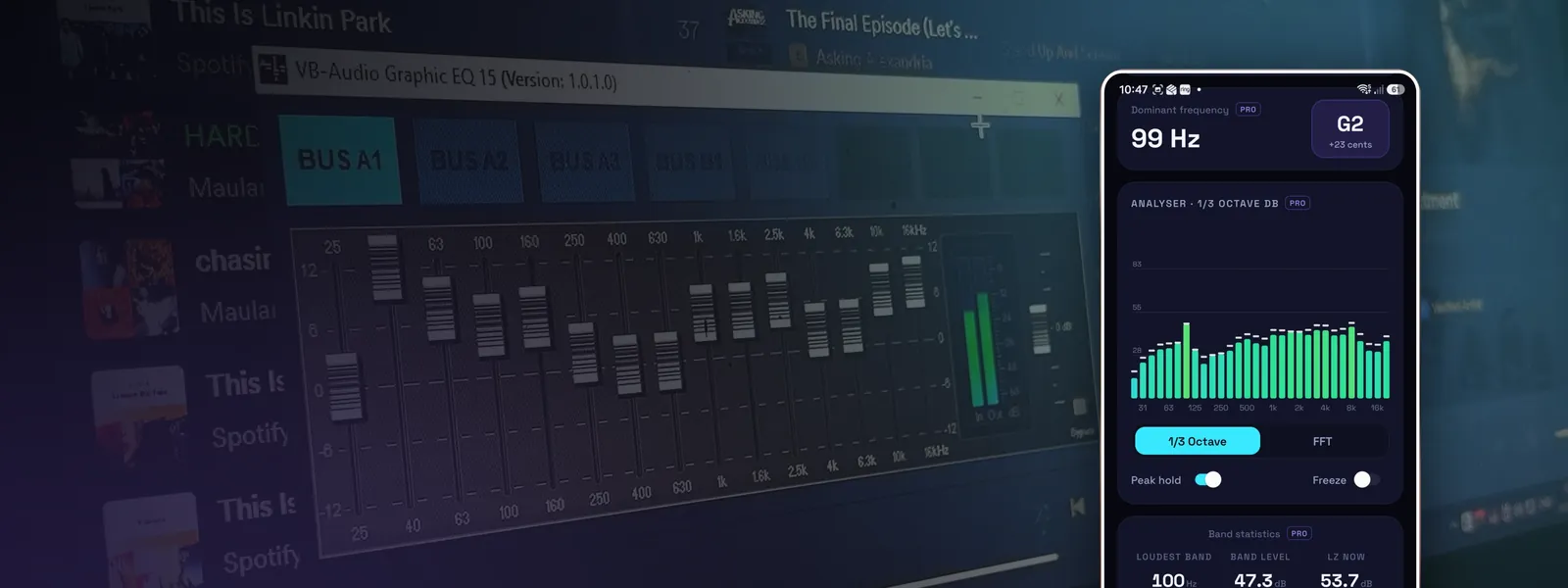
Two sound meters pointed at the same noise can give different numbers, and both be right. Usually the difference is frequency weighting: the A, C or Z after the dB. It describes how the meter treats low, middle and high frequencies before adding them up.
Why weight frequencies at all?
Human hearing isn't equally sensitive to every pitch. We hear best between about 1,000 and 5,000 Hz, roughly the range of speech, and we're far less sensitive to deep bass, especially at moderate volumes. A 50 Hz hum and a 2,000 Hz whistle with exactly the same physical energy don't sound equally loud: the whistle sounds much louder.
A plain measurement of sound pressure ignores that. Weighting filters adjust the measurement so it better matches what people hear, or so it captures what a particular use needs.
The three weightings
| Weighting | What it does | Use it for |
|---|---|---|
| A, dB(A) | Strongly reduces low frequencies and slightly reduces very high ones, roughly matching human hearing at moderate levels | Hearing safety, workplace noise, environmental and neighbour noise, most everyday measurements |
| C, dB(C) | Nearly flat, only trimming the extreme low and high ends | Loud music and bass, peak levels, judging low-frequency content |
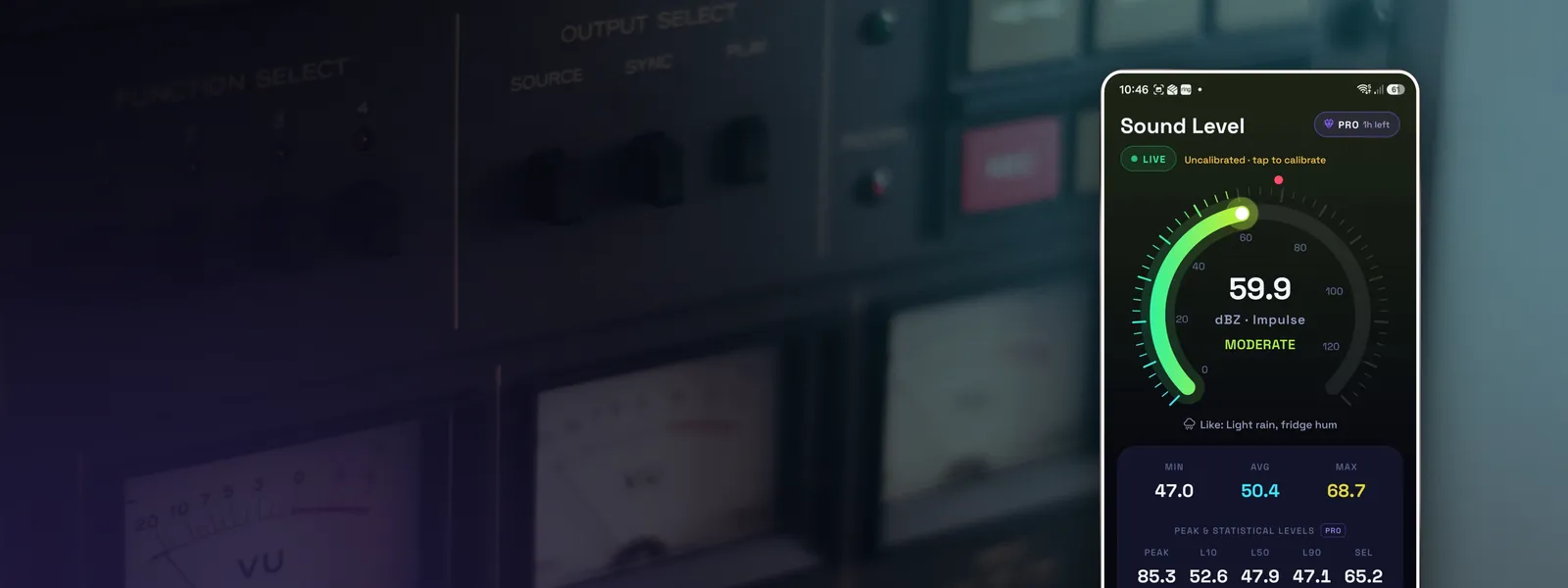
| Z, dB(Z) | Zero weighting: flat across the audible range | Acoustic analysis, the "raw" sound level |
All three are defined in the international sound level meter standard, IEC 61672.
How big is the difference?
At 1,000 Hz, all three weightings agree. Elsewhere they diverge:
| Frequency | A-weighting | C-weighting |
|---|---|---|
| 31.5 Hz (deep bass) | −39 dB | −3 dB |
| 63 Hz | −26 dB | −1 dB |
| 125 Hz | −16 dB | 0 dB |
| 500 Hz | −3 dB | 0 dB |
| 1,000 Hz | 0 dB | 0 dB |
| 4,000 Hz | +1 dB | −1 dB |
| 8,000 Hz | −1 dB | −3 dB |
So for a sound that's mostly bass, such as a nightclub, a subwoofer, an idling lorry or a boiler's hum, dB(C) can read 10 or 20 dB higher than dB(A). For a sound that's mostly mid and high frequencies, like speech or a hair dryer, they'll be close.
Tip: a big gap between dB(C) and dB(A) for the same sound is a quick way to tell it's bass-heavy.
Which one should you use?
- Checking if something is safe for your ears: dB(A). Hearing guidance and the safe-time figures in how loud is too loud? are all in dB(A).
- Noise from neighbours, roads or businesses: dB(A) for the general level. If the complaint is about thudding bass, note the dB(C) level too, because A-weighting can understate it.
- Live music and DJing: dB(A) for audience exposure, dB(C) to keep an eye on bass. Venue limits are sometimes set in both.
- Peaks from bangs, hammers and gunshots: peak dB(C), written LCpeak. Workplace rules set peak limits in dB(C).
- Analysing a sound or a room: dB(Z), alongside a spectrum analyser.
A note on time weighting
Meters also have time weighting: Fast (125 ms), Slow (1 s) and Impulse. That's about how quickly the reading responds, not which frequencies count. Fast is standard for most measurements; Slow makes a fluctuating reading easier to read. You'll see both combined in labels like LAF (A-weighted, Fast) or LCS (C-weighted, Slow). Our guide to Leq, L10, L90 and SEL covers the rest of the alphabet soup.